Backing Simile to Simulate the World

What if you could see how people might respond to a decision before making it? That is the future Simile is building. Just over a year after co-leading its seed round, we’re investing for the third time through the company’s Series B, led by Greenoaks and valuing the company at $2 billion.
From Smallville to Simile
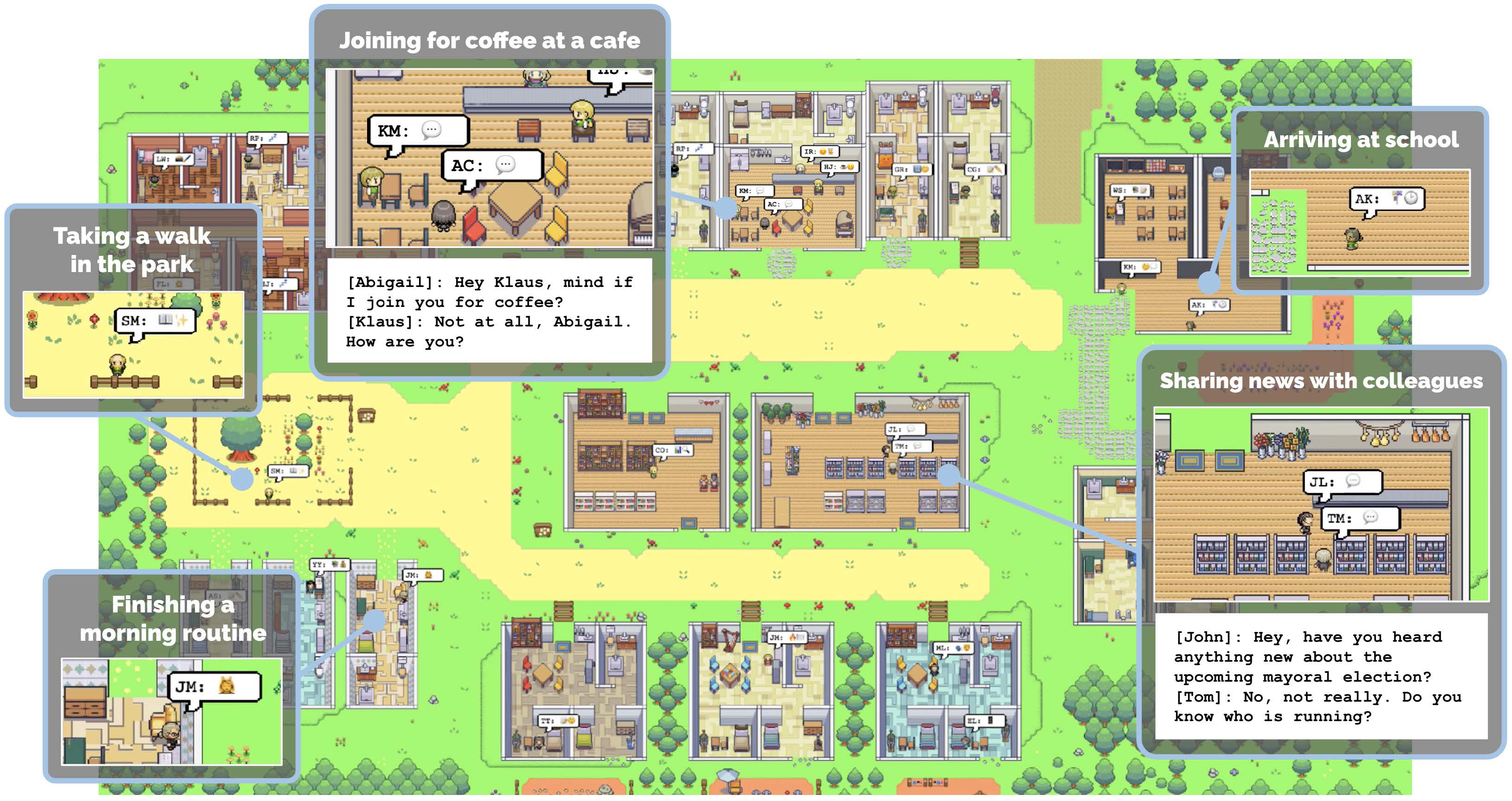
We had been following Joon Sung Park’s research long before we first met him over coffee at Bytes Cafe on Stanford’s campus. The image of his “Smallville” world—a pixelated town whose generative agents formed relationships, made plans, and went about their lives—had become emblazoned in our minds as we explored investments focused on agentic workflows. It offered the clearest glimpse we had seen of what generative agents could become: software that doesn’t merely respond to instructions, but remembers, reflects, and acts within an evolving world.
That day, Joon told us he was considering turning the research into a company with his two PhD advisors, Percy Liang and Michael Bernstein. Percy is a Stanford computer science professor, director of the Center for Research on Foundation Models, and co-founder of Together AI. Michael is a Stanford professor known for his leading work in human-computer interaction, social computing, and human-centered AI. Together, the three had helped pioneer generative agents, opening a new technical frontier: AI that could model not just what people say, but what they might do next.
After hours of working sessions together, it became clear that Joon, Percy, and Michael were not only exceptional researchers, but also deep product thinkers. When Lainie Yallen, who had previously led GTM at Hebbia, joined the team soon after, the founding team was rounded out, combining world-class research and proven go-to-market expertise. They had a distinct view of where AI was going and a precise vision for turning the science into a product.
A new application paradigm
Much of the first wave of enterprise AI has focused on familiar workflows: processing documents, retrieving information, writing text, or generating software. Simile represents an entirely new application paradigm—a way to test how people and systems may respond before making a decision in the real world.
Simile starts with data about how real people think, choose, and behave. From that data, the platform creates individual, high-fidelity behavioral agents, each with distinct experiences, preferences, and decision patterns.
Joon brought a unique sensibility to that vision. In addition to being a world-class computer scientist, he trained as an oil painter in a hyperrealist studio. The connection is more than biographical. In both painting and simulation, fidelity lives in the details. A convincing portrait is not an average of many faces; it captures the qualities that make one person unmistakably themselves. That same respect for specificity runs through Simile. The goal is not to create a generic “consumer.” It is to model the preferences, histories, contradictions, and relationships that shape how real people behave.
Companies can assemble those individual agents into populations and introduce a scenario: a new product, price, customer journey, message, or policy. They can then examine who responds, how they respond, why they respond that way, and what happens next.
Traditional research captures a snapshot. Simile lets organizations rehearse possible futures.
From research to real decisions
When we first invested, the open question was a “when,” not an “if.” Years of research and several award-winning papers had shown that the technology worked, but how quickly people would trust it enough to use it for consequential decisions?
The answer came quickly and emphatically. Demand has been among the strongest we have ever seen at this stage, and it has come from the biggest companies in the world. They are using Simile for product development, customer experience, strategy, and other critical decisions.
The value of better decisions
The obvious spreadsheet TAM begins with the global market-research industry. That is already a large market, but it misses the forest for the trees.
Simile is not simply a faster survey, a more scalable focus group, or another research tool. Its real market is the value of making better decisions.
What is the value of creating products that customers love more? Of setting the right price—before leaving revenue on the table or driving customers away? Of discovering a failure, an unintended consequence, or a missed opportunity before committing capital, time, and reputation? Simile arms everybody within an organization with the tools to make these better decisions, nearly instantly.
Simile is not just building a new research workflow. It is building an entirely new decision layer.
What happens when our most consequential decisions can be tested before they are made?
We’ll ask Simile.